Introduction
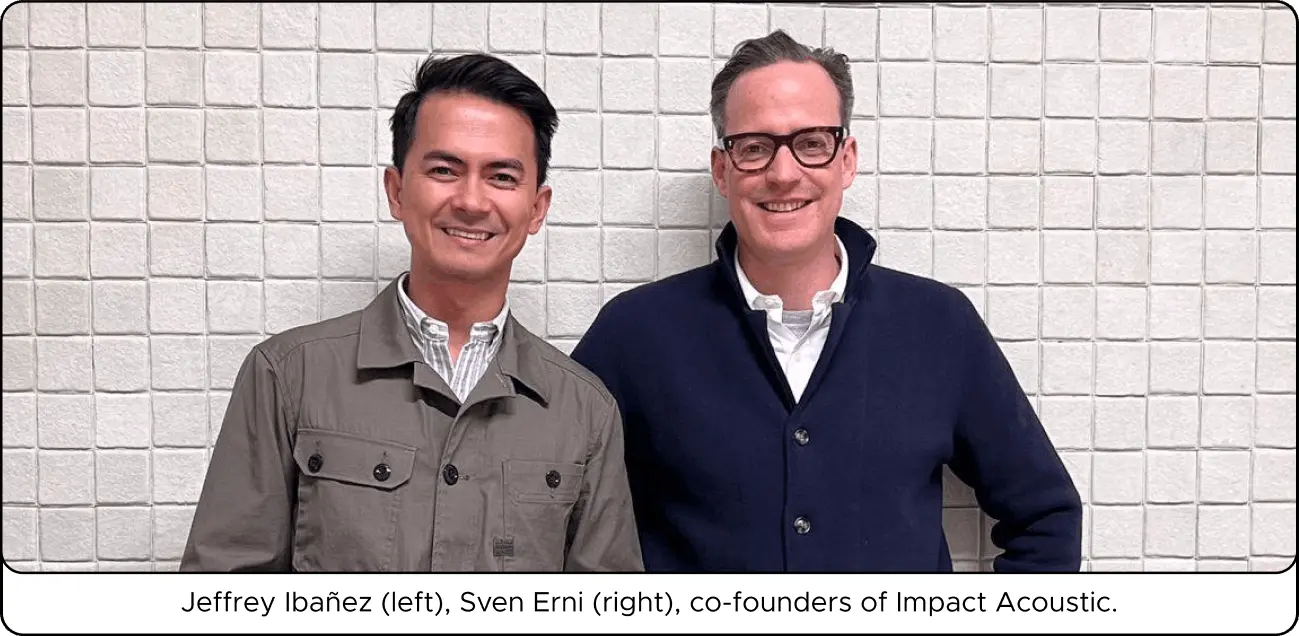
Impact Acoustic is a Swiss company specializing in bespoke architectural acoustic solutions. Drawing on the precision of Swiss engineering, they combine circular material innovation, advanced digital fabrication, and design expertise to create acoustic products that deliver exceptional performance and contribute to a more sustainable built environment.
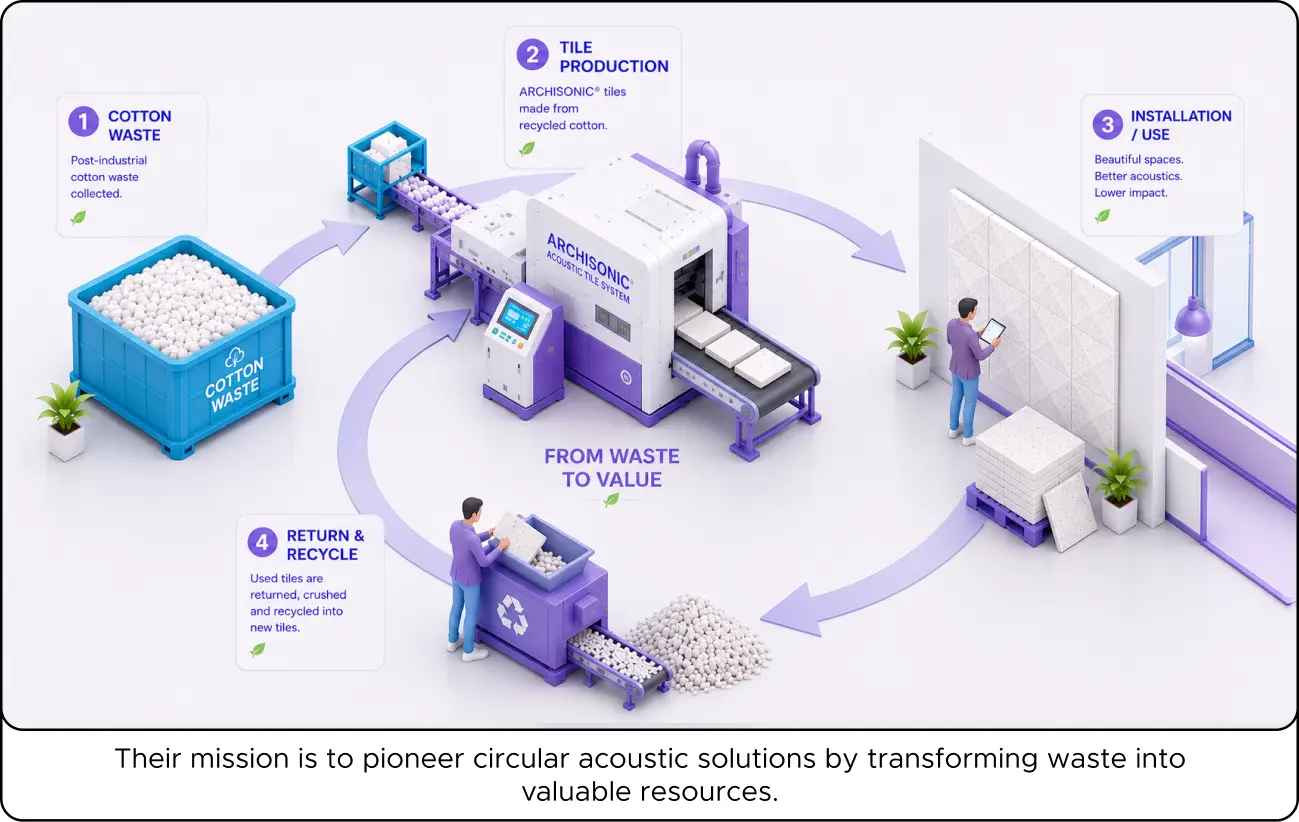
Their mission is to pioneer circular acoustic solutions that make a measurable impact by transforming waste into valuable resources and setting new standards for responsibility, performance, and design in the architecture and interiors industry.
What market need or customer problem led you to develop bespoke acoustic solutions in this way?
The architecture and design industry faces growing pressure to create spaces that support well-being, productivity, and sustainability without sacrificing aesthetics or performance. Impact Acoustic was founded to address this challenge by offering acoustic solutions that are both highly functional and environmentally responsible.
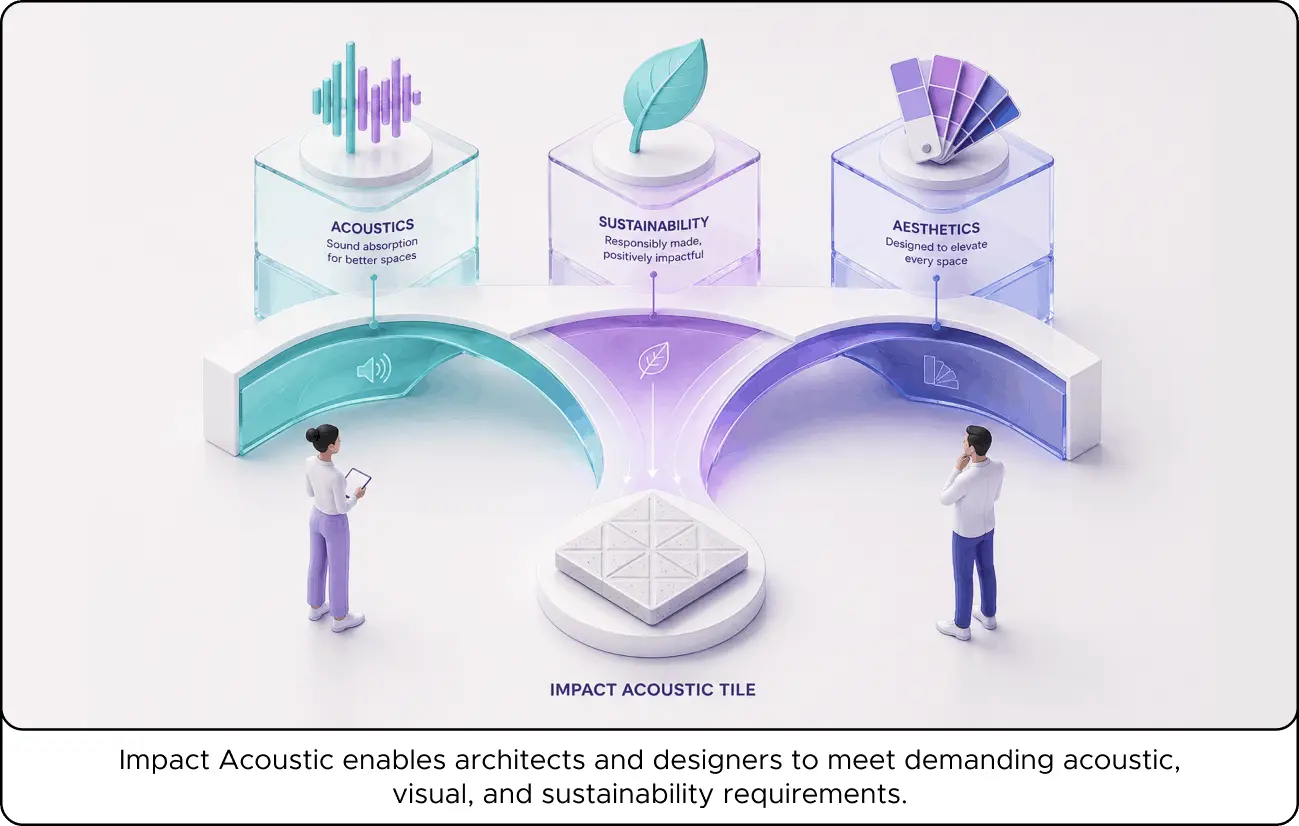
Our bespoke approach translates complex architectural concepts into tailored acoustic designs, enabling architects and designers to meet demanding acoustic, visual, and sustainability requirements through a single, integrated solution.
How does computational design fit into Impact Acoustic’s broader business and product strategy?
Most of our products feature complex geometries and assemblies that would otherwise be too tedious for our designers to create manually if the clients want them tailored to their specifications. Through computational design, more specifically Grasshopper, we develop scripts that automate most, if not all, of the design process for our bespoke products.
For readers who are new to your work, what is Canvas, and what experience are you trying to create for architects and designers through it?
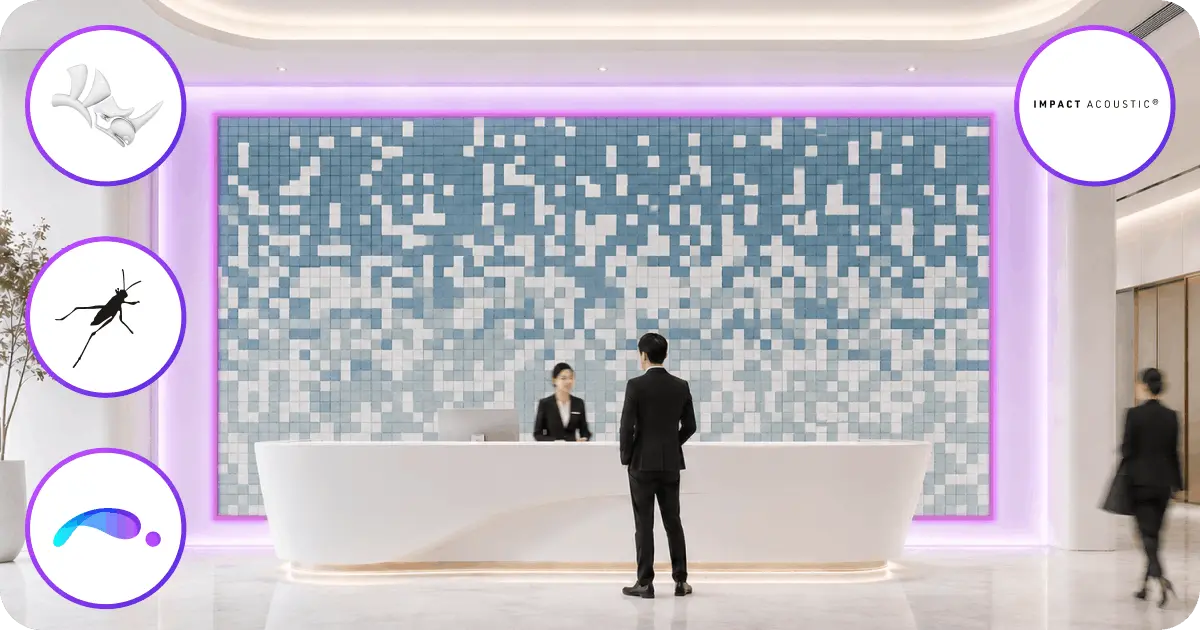
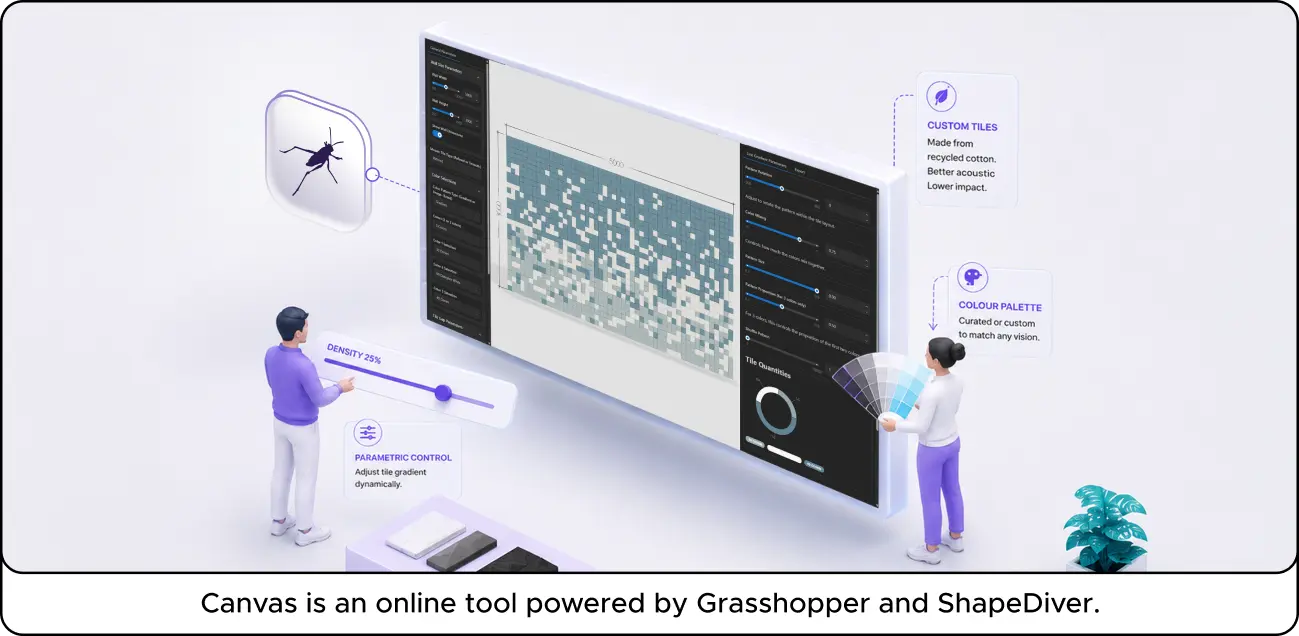
Canvas is a Grasshopper script we developed that creates gradient-like patterns using our ARCHISONIC® Cotton Mosaic tile products. These patterns are generated using either attractor geometries or image sampling techniques. The size of the gradients and their fallout are controlled by parameters and random number components.
Canvas is built for our designers for interior design or interior fit-out projects, primarily for walls.
Before Canvas, what did the design and quotation workflow look like, and where were the main bottlenecks?
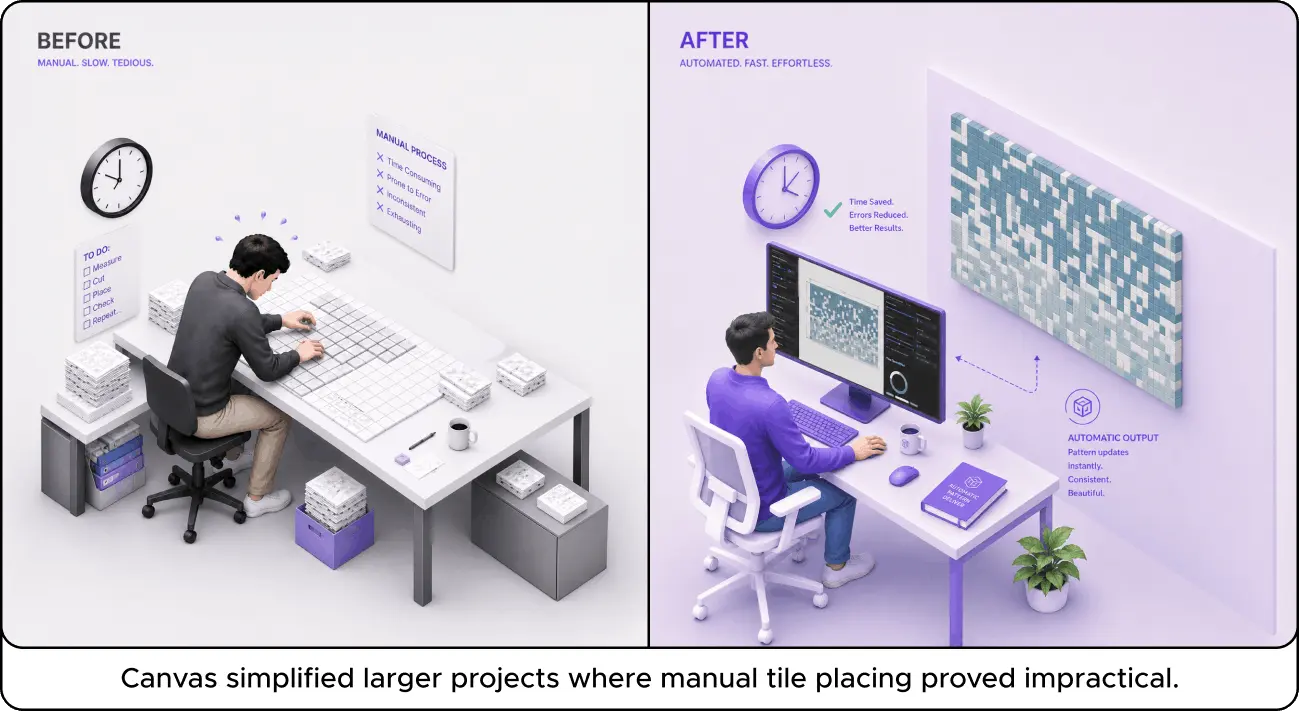
Before Canvas, the workflow for projects using Mosaic simply involved manually placing the tiles, which are 100x100mm in size. For small projects, this wasn’t much of an issue, but for projects with much larger required boundary sizes for the tile layout, such as assembly halls, doing this manually proved impractical.
What specific challenges were you hoping to solve by moving this part of the process into a ShapeDiver-powered experience?
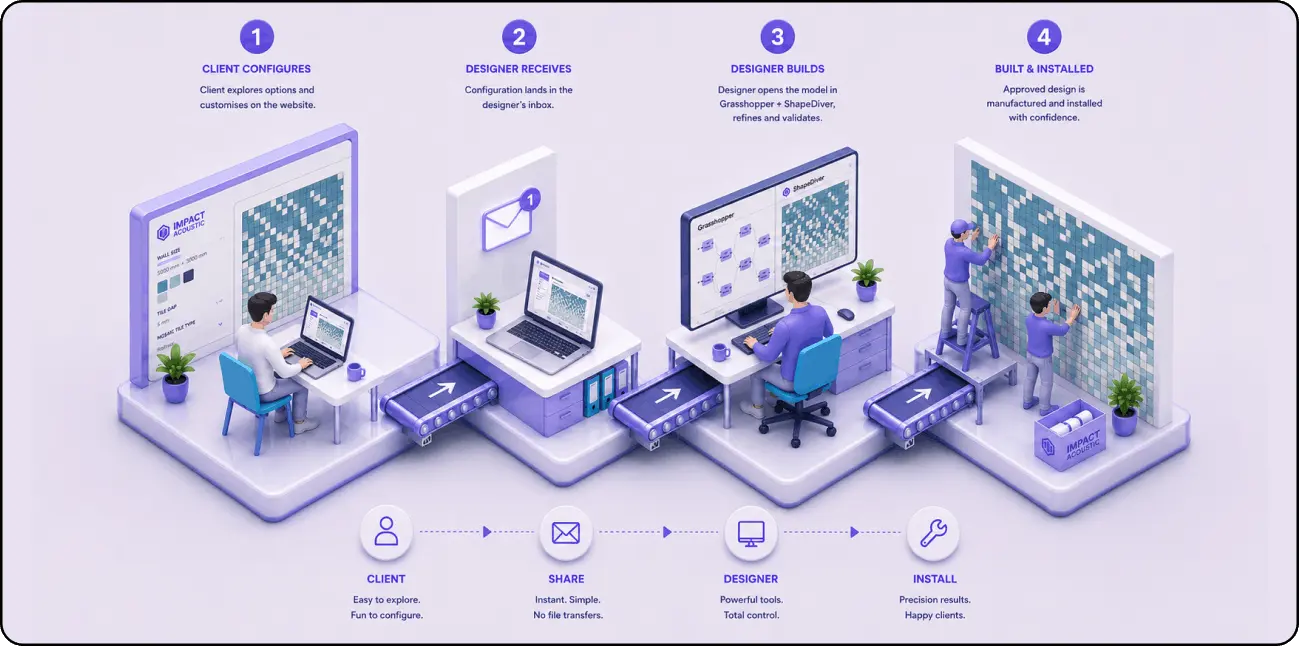
We decided to create a ShapeDiver version of this script so that we can bring the experience of “painting” your design onto Canvas to our clients and anyone who visits our website. This way, we can better show potential clients how versatile and highly customizable Canvas can be, and we can better market it to those who would eventually become interested in the product.
How do wall dimensions, design intent, color selection, and other parameters influence the final output behind the scenes?
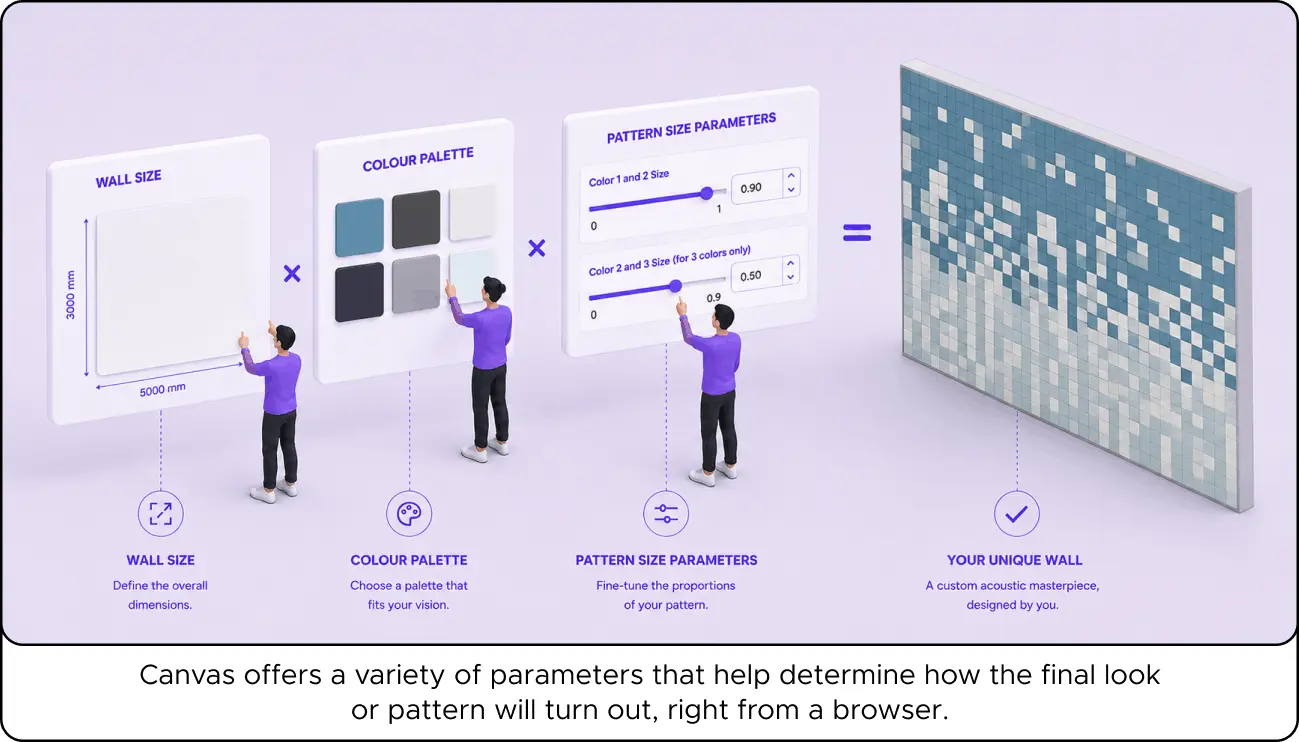
These parameters work together to determine how the final look or pattern will turn out. A larger wall dimension can create a more complete-looking design, color selections can introduce more detail, and other parameters, such as color fade and gradient sizes, can add more character to the patterns.
How do you balance design freedom for the client with manufacturing constraints, acoustic performance, and commercial feasibility?
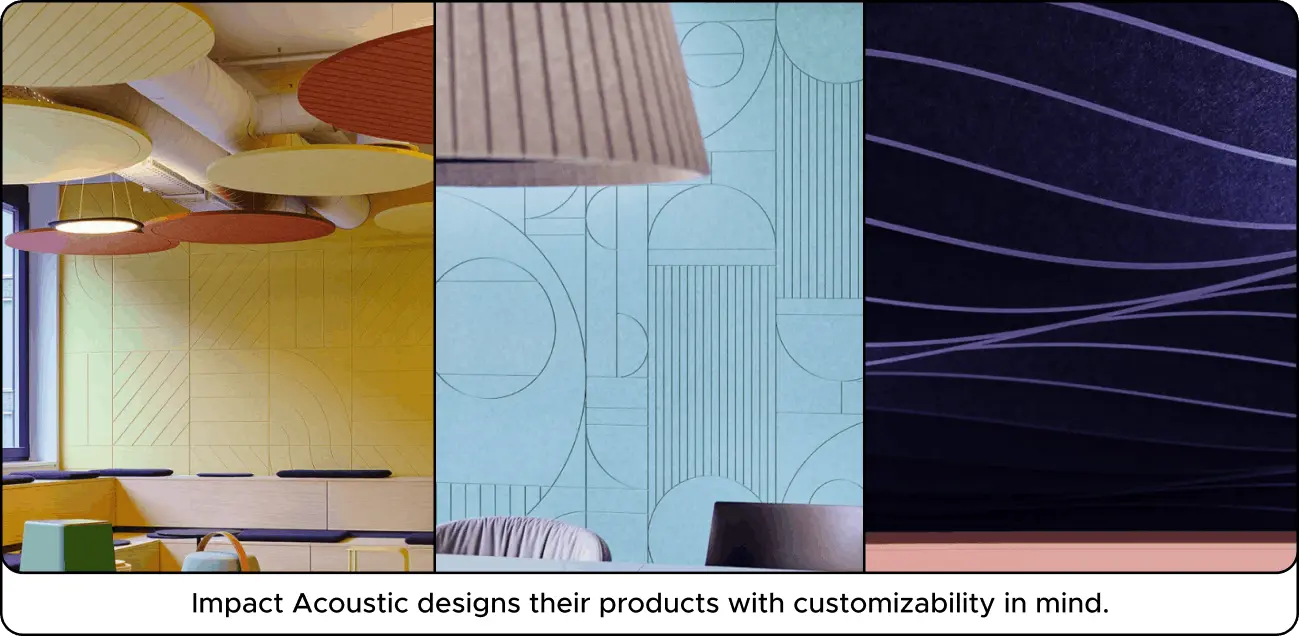
We always design our products with customizability in mind, hence their bespoke nature. This ensures that, while our products are designed for acoustic performance and commercial feasibility, we give our clients a way to tailor them to their needs and specifications.
Impact Acoustic places strong emphasis on circularity and material innovation. How do those principles shape the way Canvas was conceived and built?
The circularity and material innovation aspects of Canvas are primarily embodied in the Mosaic cotton tiles. The script merely lays them out according to the design specifications provided by our clients.
How has Canvas changed the way non-technical stakeholders, such as architects, interior designers, or sales teams, engage with your design process?
It’s always a challenge to communicate with the client about exactly how they want the design to look, and I think that with Canvas, which is highly customizable and allows countless iterations, this challenge becomes even more prominent. The integration of Canvas with ShapeDiver gives the client an identical tool to the one our designers use, allowing them to communicate their intent more clearly.
Were there any unexpected lessons, technical challenges, or design decisions that shaped the final version of the tool?
Since this was our first introduction to ShapeDiver and our first attempt to integrate it into our website, we faced a few challenges, mainly in embedding the app version of the ShapeDiver script. We also had to introduce certain limitations on the controls or parameters due to computational constraints, to avoid long loading times for clients.
Looking ahead, how do you see Canvas evolving, and are there additional products, use cases, or capabilities you would like to bring into similar digital experiences?
Aside from adding a parameter export feature, we are also working on adding a 2D model export for Canvas so clients can use it in their visualizations. We have also worked to integrate ShapeDiver with the other scripts we created for our products. We plan to do this with as many of our future scripts and products as possible so our clients can better see and understand what our products are all about.
For other product companies exploring computational design and online configuration, what advice would you give based on your experience so far?
Client communication is a pivotal part of promoting and selling our product. We always emphasize how best to showcase our products to potential customers. We do this by sharing product renders, shipping samples, and providing spec sheets, each with its own advantages and limitations.
Using online configurator solutions such as ShapeDiver, we add another way to effectively promote our products. Instead of relying solely on static images, fixed objects, and words, we give them something dynamic, a piece of the design process, so they can better understand how the product can be made to their specifications, how it can be made, and what possibilities are available to them. By showing rather than just telling, they can see our products more clearly and with greater understanding.